Tag: work

  • Addiction

    Addiction

    Dick had treated heroin addicts from Day 1 of his residency in 1966, when there was an epidemic among middle class young white people that drew the attention of the press and the government, and eventually led to a War on Drugs. From the dead overdose victim being dumped on his front porch in 1968 to the prescription drug plague, Dick was familiar with the opiate epidemic.

    In the early 2000s, the City and County of San Francisco and the State of California began to adopt a new model for treating patients addicted to opiates, whether prescription medications or heroin. Dick, like most primary care doctors, took it for granted that he would help his patients kick their addiction to cigarettes or alcohol. Now he wanted to add treatment for opiate addiction to primary care.

    Dick of course was in the vanguard. He adopted a harm-reduction strategy and became certified to prescribe suboxone, or a combination called Buprenorphine, drugs that had been used in Europe for decades.

    As often happened, the US was far behind other countries in adopting public health innovations.

    Dick became a leader of the Office-Based Opiate Addiction Treatment program (OBOAT), which trained clinic doctors and private practitioners to manage opiate addiction as part of their primary care practice. No longer would addicts to prescription meds or heroin be required to go to specialized clinics. Their family doctor could provide treatment for their disease of addiction, right along with treating their high blood pressure, diabetes and providing the rest of their primary care.

    Dick set up meetings to bring together clinicians, researchers, and government officials.

    Hard day today,

    I have a meeting out at the Jail, after the OBOAT training. Milton Estes, the OBOAT doc at the Jail now, left his private practice in Mill Valley. He’s a good guy.

    We may be able to stop the Get Out of Jail and Overdose syndrome. Addicts detox in Jail, due to the relative unavailability of heroin, and then when they’re released they get together with their addict friends, get high and die, because their tolerance has been reduced.

    If they’re on buprenorphine, this won’t happen. We’re lucky Michael Hennessey is such a progressive Sheriff; so open to everything that might help people who are still in the early stages of their criminal career.

    The OBOAT training had gone well. Dick gave the welcome speech. He reminded everybody to pick up their written materials and leave a urine specimen.

    The hotshot from Yale gasped and then hid his eyes. I got one of the only two laughs all day. It was a great meeting but too serious. A hundred people were registered and a hundred and twenty showed up, plus fifteen walk-ins. We ran out of everything. We had to ask the caterer for more food, more chairs.

    People are really interested. This is important stuff. We just need to get the doctors in France to write up what they’ve been doing for the past ten years. They claim all these results but they haven’t published anything.
  • Prisoners’ Health Project

    Prisoners’ Health Project

    In 1970, San Francisco County Jail inmates sued the Sheriff for providing seriously substandard healthcare in the San Francisco County Jails, leading to illness and death. (C-70-1244, Smith v. Hongisto (first filed as Smith v. Carberry), U.S. District Court N.D.Cal). The Court ordered the Sheriff to improve conditions.

    Dr. Richard Fine took on the challenge of establishing standards and implementing programs to provide the community standard of health care to prisoners in the jail. He asserted the revolutionary concept that they too had a right to health care. In the 1970’s, there were officials who publicly stated that prisoners in the jail were bad people who did not deserve ANY health care, much less the high standards demanded by Dr. Fine and his allies in the Health Department and the prison reform movement.

    In 1972, Dr. Fine obtained four years of federal funding for the Prisoners’ Health Project (PHP). He established a jail intake health-screening program, ongoing primary care within the Jails, social services, and psychiatric care. The goal of the PHP was to demonstrate that it was possible to provide decent health care to prisoners, both in the jails, and in the Security Ward at San Francisco General Hospital, within a reasonable budget.

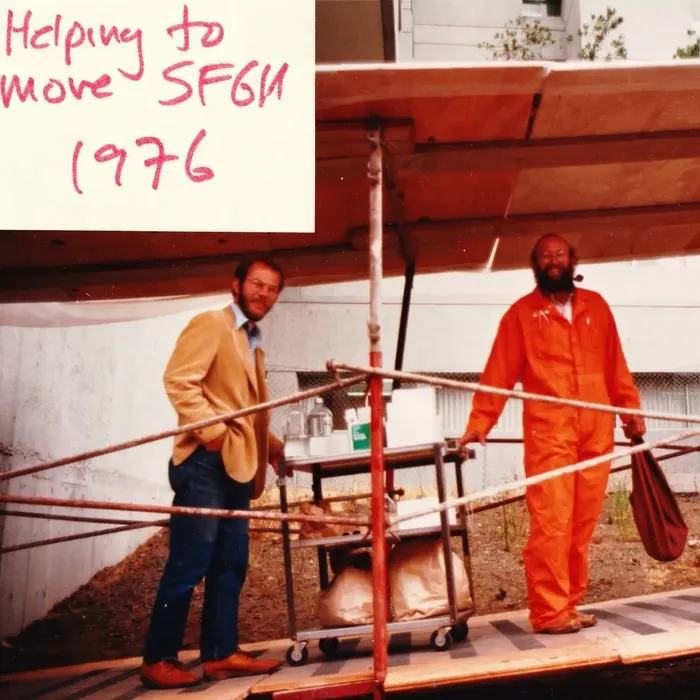
    He succeeded in having the 20-bed Security Ward included in the design for the new hospital built in 1976. This Security Ward, staffed by deputies from the Sheriff’s Department and doctors, nurses and social workers from the Prisoners Health Project and eventually the Department of Public Health, was the first dedicated inpatient medical-psychiatric facility for incarcerated people in the United States.

    Jail Health Services was established as an independent entity within the Department of Public Health and receives its budget for health care personnel from that department. The Sheriff’s Department provides security.

    In the four-plus decades since Dick Fine promoted the revolutionary concept that even prisoners in jail deserved quality health care, the Jail Health Services of the San Francisco Department of Public Health has expanded exponentially. Now headed by Dr. Lisa Pratt, a physician board-certified in internal medicine and addiction medicine, the 160-plus member staff of doctors, nurses, nurse practitioners, behavioral health clinicians, dentists and support services provide a high standard of care.

    This includes a comprehensive and integrated system of medical, psychiatric and substance abuse care. In a typical year, JHS staff individually triage over 24,000 and medically screen over 16,000. There are two Security Wards at San Francisco General Hospital, one for medical patients and one for psychiatric patients. Jail inmate patients also receive care at SFGH outpatient clinics.

    In 2020, staff worked with SFSO Custody Command to address COVID-19 risks in real-time, troubleshooting and implementing solutions, such as testing individuals for COVID-19 at booking, beginning on April 12, 2020.

  • Medical Clinic at SFGH

    Medical Clinic at SFGH

    Dick’s greatest achievements were his role in the creation of the General Medical Clinic at San Francisco General Hospital, now named the Richard Fine People’s Clinic (RFPC), and in establishing the Primary Care Residency Program.

    Before the Clinic, patients who were in the Hospital were discharged with no follow-up.

    As one of his colleagues says in Biker With A Moral Compass, “There weren’t clinics so you’d hospitalize a patient with diabetic ketoacidosis then you’d wave goodbye. See them again in the emergency room or see them in the morgue. That’s no way to practice; the Clinic was essential for us.”

    The revamping of primary care according to the vision of Dick Fine was what made this clinic amazing. Also remarkable was his ability to see the effectiveness of outpatient care for management of chronic conditions like hypertension, diabetes, and coronary artery disease.

    Dick had a major role in creating general medicine and ambulatory care, with continuity of care for patients and ongoing relationships with their providers. He started teams before there were team teaching, team rounds incorporating the nurses, the residents and the physicians for each patient. He helped change how people view American medicine and care. He wanted others at San Francisco General to realize the need to improve the availability of care. Dick committed his life to inspiring support for the concept of healthcare as a right.